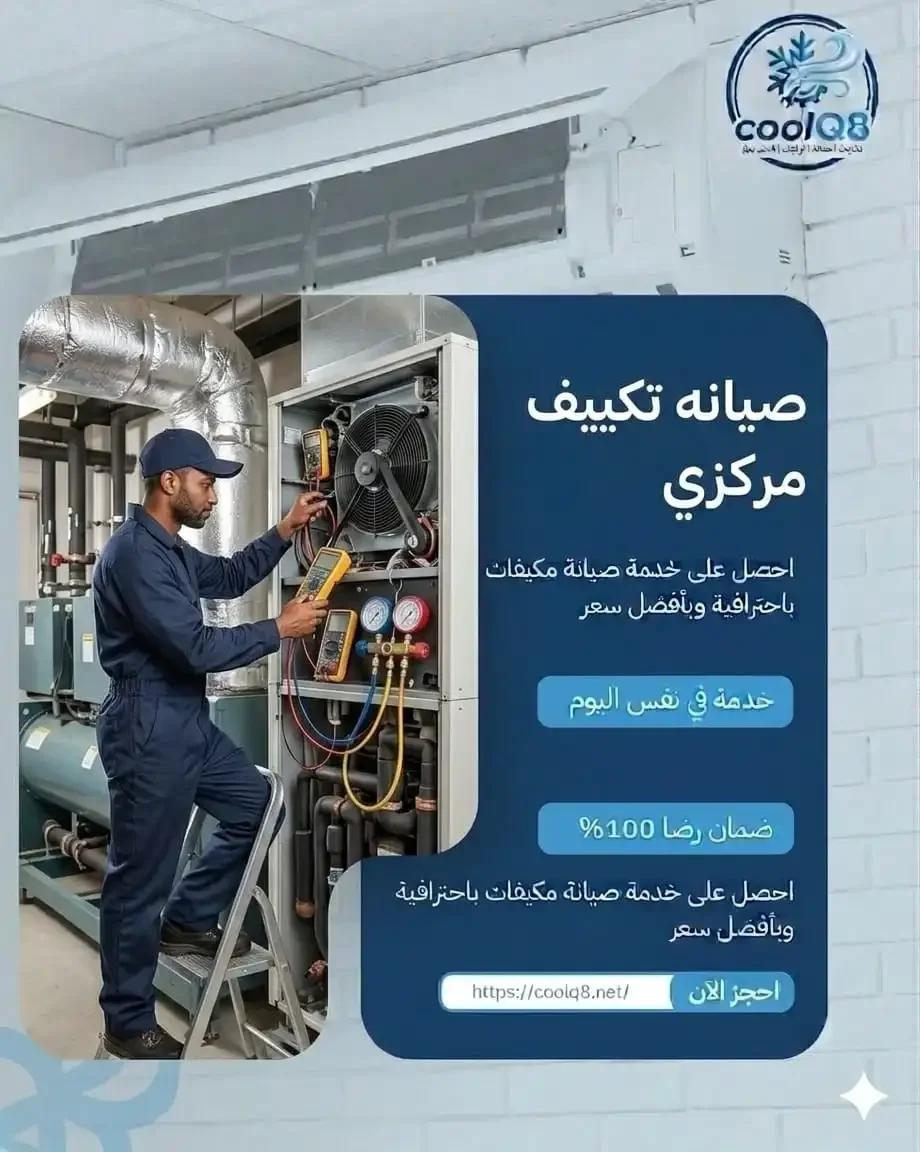
Is Central AC Maintenance Before Summer Worth It
Central air conditioning may operate normally during mild weather, only for cooling problems to appear when temperatures rise and the system is used more frequently in summer. This is why many homeowners and villa owners in Kuwait wonder whether maintaining their central AC before the season is worth the cost or whether it is better to wait until a clear fault appears. The answer depends on the system's condition, maintenance history, and how it is used, but an early inspection gives you an opportunity to identify existing problems before a period of intensive operation. This does not mean that every air conditioner needs comprehensive cleaning or replacement parts before summer. This article explains when seasonal maintenance is useful, which procedures deserve attention, and how to choose an appropriate service without paying for unnecessary work.
Central AC Maintenance Before Summer

Central AC maintenance before summer deserves attention when the objective is to confirm that the system is ready for a period of increased cooling demand, rather than simply arranging a routine visit without knowing the equipment's condition. An air conditioner may operate for limited periods during mild weather but need to run for much longer in summer to cope with outdoor temperatures and the cooling requirements of different rooms. As a result, a minor problem with airflow or water drainage may become more noticeable as operating hours increase.
Early maintenance is particularly useful if the homeowner noticed a change in the air conditioner's performance during the previous season. One room may have taken longer to reach the required temperature, or water leakage may have appeared and then stopped when the equipment was used less frequently. The disappearance of a symptom does not prove that its cause has been resolved, so it is appropriate to mention it when booking an inspection before summer.
However, advance maintenance does not guarantee that no faults will occur throughout the season. Components may fail later even if they were in suitable condition at the time of inspection, and the outcome of the visit depends on the agreed scope of work. Expectations should therefore be realistic: maintenance helps assess the system's current condition and address problems that can be detected, but it cannot prevent every future breakdown.
The decision also differs between an air conditioner that recently underwent an appropriate inspection and has shown no problems and another whose condition has not been reviewed for a long time. The first may only need specific follow-up work according to the manufacturer's instructions, while the second may warrant a broader assessment depending on its age, operating conditions, and history of previous problems.
The importance of maintenance before summer becomes clear in the following situations:
- Unresolved observations from the previous summer: If cooling became weaker during periods of intense heat or water appeared near the unit during prolonged operation, it is appropriate to review these symptoms before the season instead of waiting for them to recur when the home needs continuous air conditioning.
- Uncertainty about when the system last received appropriate maintenance: When no clear record of previous work is available, an inspection helps establish the current condition of components that require attention according to the equipment's instructions, without assuming that all of them need cleaning or replacement.
- The home depends on central AC for most of its rooms: A shared unit shutting down may affect large areas of a home or villa, so assessing its condition early and arranging any necessary repairs before dependence on it increases during summer can be useful.
- A desire to understand the cost before the season begins: An early inspection provides an opportunity to request an explanation of the required work, compare the scope of different services, and review proposed repair costs instead of making a rushed decision when cooling suddenly stops.
- The air conditioner operates normally without any previous complaints: This does not automatically mean that comprehensive maintenance is required. The model's instructions and maintenance history should be reviewed to determine the appropriate routine work instead of paying for procedures without a confirmed need.
Preparing Central AC for Summer
Preparing central AC for summer begins with reviewing the conditions under which the system will operate during the season, rather than lowering the temperature to its minimum setting or running it briefly to confirm that cold air comes out. Appropriate preparation includes determining whether all areas receive the required cooling, whether the controls respond normally, and whether there are any observations involving water drainage, unusual sounds, or repeated operation.
In a villa with independent units serving different floors and annexes, it is important to identify which units will be used more frequently during summer. An annex unit may operate infrequently throughout the rest of the year and then be used daily when guests visit or a family member stays there. In this situation, it is appropriate to assess its condition before intensive use begins rather than assuming that limited previous operation necessarily means it is ready.
Preparation also includes reviewing conditions inside the home that affect cooling. Changing how a room is used, adding equipment that produces heat, or modifying windows and curtains may alter the space's cooling requirements compared with the previous season. If a particular room has become warmer, the main unit should not automatically be assumed to be defective before the new conditions are evaluated.
Work that requires opening equipment, inspecting electrical connections, or handling the refrigeration circuit must be left to a qualified technician. Attempting to prepare the equipment by removing covers or washing internal components without knowing the model's instructions is not recommended because certain parts must not be exposed to water or handled while connected to electrical power.
Appropriate preparation includes the following aspects:
- Review the performance of rooms that will be used every day: Observe whether bedrooms, living rooms, and shared areas reach the required cooling level under suitable operating conditions, and record any noticeable differences that need inspection before temperatures become more intense.
- Check the readiness of units that are used infrequently: If a unit serves an annex or floor that is not occupied regularly, it is better to review its condition according to the equipment's instructions before relying on it for extended periods during summer.
- Identify changes made to the home: New glass frontages, changes in how rooms are used, or additional internal heat sources may affect cooling requirements, so the technician should be informed of these changes when evaluating system performance.
- Review control settings that users are permitted to adjust: The required operating mode can be selected and suitable temperatures set according to the equipment's instructions without changing internal technical settings or bypassing protective devices.
- Organize work that requires access to the equipment: If certain units are located above suspended ceilings or in elevated areas, it is appropriate to establish a safe method of accessing them before the visit to avoid disrupting the home or making unapproved changes to its interior finishes.
Seasonal Central AC Maintenance
Seasonal central AC maintenance means performing follow-up work that suits the timing of intensive use, the equipment's condition, and the manufacturer's requirements. The list of procedures does not have to be identical every season because the condition of filters, drainage paths, and units may vary according to operating hours, the surrounding environment, and work completed during previous visits.
It is important to distinguish seasonal maintenance from an inspection requested because of a specific fault. A maintenance visit may include reviewing components that require routine attention, while a complaint such as a particular unit shutting down or water leakage requires diagnosis directed toward the cause. A technician may combine both types of work if the visit's scope allows it, but additional procedures should be explained before they are performed.
The quality of seasonal maintenance is not measured by the number of parts replaced. Components may be in suitable condition and require only monitoring or specific cleaning, while another part may need repair because a fault was confirmed during inspection. Refrigerant charging is also not a fixed seasonal procedure because work involving the refrigerant charge requires a confirmed technical reason and procedures appropriate for the system.
Keeping a brief report that explains the equipment's condition, completed procedures, and observations requiring follow-up is useful. This report helps compare the system's condition between seasons without relying on memory or repeating a procedure that has not been shown to be necessary.
Appropriate seasonal maintenance includes the following:
- Determine the work according to the model's instructions and equipment history: The manufacturer's requirements and procedures completed during previous visits should be reviewed so that maintenance reflects the system's actual needs instead of repeating a fixed checklist without considering its condition.
- Assess components affected by operating conditions: Filters or certain other components may require different levels of attention depending on use and the surrounding environment, so their condition must be inspected before deciding whether cleaning or replacement is necessary.
- Separate routine attention from additional repairs: If an inspection reveals a fault requiring a replacement part or specialist procedure, the reason for the work and its cost should be explained before it is added to the agreed service.
- Avoid procedures unrelated to inspection findings: Washing every unit, cleaning the entire duct network, or adding refrigerant should not be treated as mandatory parts of every seasonal maintenance visit without a clear need.
- Record observations that can be referred to later: A report explaining the condition of components, completed work, and any deferred recommendations helps monitor the system during the following season without confusing an old problem with a new symptom.
Central AC Inspection Before Summer
Central AC inspection before summer aims to establish a clear understanding of the system's current condition before its operating hours increase. The scope of inspection varies according to the type of air conditioning, the number of units, the method of air distribution, and the observations provided by the homeowner. It is therefore not enough to confirm that the air conditioner starts or that cold air comes from one of its outlets.
If a villa contains several units, it should be established whether the inspection includes all of them or is limited to a particular unit. If a problem appeared in only one room during the previous summer, it is appropriate to review the area associated with that room instead of assuming that every part of the system has the same fault.
The inspection may require reviewing control response, the condition of components specified in the maintenance instructions, and water drainage paths, with specialist tests performed when an observation makes them necessary. Opening electrical panels or handling moving parts and the refrigeration circuit must be carried out by a qualified specialist in accordance with safety requirements.
- Review observations from the previous season: Knowing when cooling became weak, unusual sounds appeared, or operation stopped helps select inspections associated with the problem instead of performing tests unrelated to the complaint.
- Identify the units included in the inspection: It should be clear whether the visit covers the system serving the entire home or only part of it so that the inspection findings correspond to the actual scope of service.
- Check control response: The response of different areas to the requested settings should be evaluated according to the system's design, particularly if occupants noticed uneven cooling during the previous period of use.
- Review drainage conditions when previous problems have been reported: If water accumulated or leaked during prolonged operation, it is appropriate to identify its source and inspect the associated components instead of simply wiping away the visible water.
- Request a clear result after the inspection: The homeowner should know which components were confirmed to be in suitable condition and which require monitoring or repair, with any work excluded from the inspection price explained before it is performed.
Preventive Central AC Maintenance

Preventive central AC maintenance focuses on monitoring components that may be affected by use and identifying observable changes before they develop into clear operating problems. It differs from repairing an existing fault: repair addresses a problem that has been identified, while preventive maintenance aims to review the system's condition and perform work recommended by the manufacturer or shown to be necessary for the equipment.
Describing a service as preventive does not mean that it can prevent every breakdown. A component that was operating normally during inspection may fail unexpectedly later, and some problems only appear under particular operating conditions. The practical value of preventive maintenance therefore lies in improving ongoing monitoring and making earlier decisions about problems that can be detected.
- Monitor components according to operating conditions: The needs of a system that operates every day may differ from those of a system used for limited periods, so the scope of maintenance should reflect operating hours and the equipment's instructions instead of applying one procedure to every home.
- Address minor observations after identifying their causes: If signs of water accumulation or an unusual change in the sound of a component appear, it is appropriate to assess them before use increases without assuming that they require replacement of a major component.
- Review previous work that requires follow-up: If an earlier report included a deferred observation, its condition can be reassessed before summer to determine whether it has changed and what action is appropriate.
- Do not replace working parts simply because summer is approaching: A replacement decision must be based on the component's condition, the manufacturer's requirements, and inspection findings rather than an assumption that older parts will inevitably fail when temperatures rise.
- Keep a record that allows comparisons: Documenting the results of successive visits makes it easier to notice actual changes in the system's condition instead of relying on general impressions of its performance.
Improving Central AC Performance
Improving central AC performance does not necessarily mean increasing the system's capacity or making major modifications to its components. Comfort levels may improve when an existing problem affecting airflow, control response, or the condition of a component requiring maintenance is addressed. However, if the equipment is operating according to its specifications and the problem is associated with the room's requirements or the building's conditions, maintaining the unit alone may not achieve the desired result.
It is important to define what improvement means before approving any work. One homeowner may want to reduce the time a room takes to reach the required temperature, while another home's complaint may concern uneven cooling between floors. Each situation requires a different assessment.
- Identify the problem that needs improvement: It should be made clear whether the objective is to address generally weak cooling, improve comfort in a particular room, or reduce a problem that appears during prolonged operation because the appropriate procedure depends on the nature of the complaint.
- Address factors confirmed to affect performance: If inspection reveals an airflow obstruction or a control fault, the work should target the identified cause instead of performing comprehensive cleaning without evidence that it is needed.
- Consider room conditions before modifying the system: Cooling requirements may change because of sun exposure or a change in how the space is used, so these conditions should be evaluated before proposing modifications to the air conditioning equipment.
- Do not treat lowering the requested temperature as proof of improvement: Reducing the setting may cause the system to operate for longer without addressing the cause of weak cooling or temperature differences between rooms.
- Evaluate the outcome of the work against the original complaint: After the appropriate procedure has been performed, the problem that prompted the homeowner to request service should be reviewed instead of simply observing that the unit operates and produces cold air.
Air Conditioning Maintenance During Summer
Air conditioning maintenance during summer may become more urgent when a problem affects cooling in the home during a period of intensive reliance on the system. Nevertheless, high outdoor temperatures do not mean that every difference in air conditioner performance results from a fault. Operating conditions and room cooling requirements must be considered before identifying the cause.
If water leakage, an unusual sound, or a sudden decline in cooling appears, it is appropriate to describe the problem when requesting service and explain how much of the home it affects. However, a burning smell, smoke, or water near electrical connections requires safety to be prioritized and the system to be switched off safely if this can be done without approaching the source of danger.
- Identify how the problem affects the use of the home: It should be made clear whether weak cooling is limited to a particular room or affects most of the living spaces because this helps determine the appropriate inspection needed during hot weather.
- Avoid repeatedly starting equipment that shuts down abnormally: If the system repeatedly stops or displays warnings, protective devices should not be bypassed, and the equipment should not be forced to continue operating.
- Handle water leakage carefully: Stay away from any location where water reaches electrical components and seek assistance from a specialist instead of attempting to open the unit or access its connections.
- Organize repairs that require cooling to be interrupted: If the work will affect several rooms, it is appropriate to establish the expected scope of the interruption and arrange the use of other spaces without relying on unconfirmed promises about repair duration.
- Do not postpone a clear problem simply because the season will eventually end: If a fault requiring corrective action has been confirmed, the decision should be based on its nature and effect rather than waiting for temperatures to fall while the system continues operating in an unsuitable condition.
Improving Central AC Efficiency
Improving central AC efficiency requires distinguishing between genuinely improving the equipment's condition and claiming that any maintenance procedure will inevitably reduce electricity consumption. Addressing a problem that affects performance may help the system operate closer to its intended condition, but the extent of any change in consumption depends on several factors, including building conditions, the requested temperature, operating hours, and the type of system.
A fixed percentage of savings cannot be determined simply because filters have been cleaned or a seasonal inspection has been performed. Increasing cooling capacity is also not the same as improving efficiency. The actual need may be to correct a problem that causes the system to operate improperly rather than installing larger components.
- Assess the equipment's condition before recommending improvements: It should be established whether there is a confirmed problem affecting performance or whether the system operates according to its specifications because the required procedures differ between these situations.
- Review how the air conditioning is used: Control settings, operating hours, and the way rooms are used may affect consumption, so every change in the electricity bill should not be attributed solely to the condition of the unit.
- Avoid promises of unverified savings percentages: A specific financial result should not be presented without suitable data on consumption and operating conditions before and after the work.
- Distinguish maintenance from design modifications: If the home's cooling requirements have changed substantially, a specialist assessment of the system may be necessary instead of assuming that ordinary maintenance will correct every cooling deficiency.
- Connect recommendations to findings that can be reviewed: It is better to explain the problem identified and the procedure proposed to address it rather than simply using a general expression such as improving efficiency without explaining what that means.
Air Conditioning System Maintenance

Air conditioning system maintenance varies according to the design of the equipment installed in the home. A house may rely on one central unit serving several rooms, while a villa may contain multiple units or independent control zones. This difference affects the number of components requiring attention, how they are inspected, and the appropriate scope of service before summer.
A maintenance offer should not be selected based on the home's size alone because two villas of similar size may differ in the number of units, their air distribution arrangements, and access to the equipment. It is also important to confirm that the technician is familiar with the type of system actually installed instead of applying general procedures to equipment with different requirements.
- Understand the system's design before defining the scope of service: Identifying the units, cooling zones, and shared components helps select appropriate work without assuming that every home contains the same type of equipment.
- Review the manufacturer's instructions: Monitoring, cleaning, and testing requirements vary by model, so its instructions should be used when determining routine procedures.
- Clarify whether the service includes every unit: In homes containing more than one system, the equipment included in the price should be identified so that inspecting one unit is not confused with maintaining all the home's equipment.
- Consider safe access to components: Certain equipment may require special arrangements for access, and these should be explained before work begins instead of opening ceilings or moving household fixtures without agreement.
- Choose a specialist inspection when a specific problem exists: If a fault is associated with control components, drainage, or part of the refrigeration system, the technician's skills and inspection procedures should match the nature of the problem.
Getting Your AC Ready for Summer
Getting your AC ready for summer can be assessed by considering the system's current condition, its performance history, and the conditions expected inside the home during the season. An air conditioner that operates without noticeable problems and receives appropriate maintenance may not need extensive additional procedures, while a system with recurring problems deserves a targeted inspection before reliance on it increases.
Readiness should not be judged solely by a brief operating test on a mild day. Certain observations may only appear when operating conditions change, so it is useful to refer to complaints from the previous season and the results of the most recent maintenance without assuming that any problem will necessarily recur.
- Review whether previous problems have been resolved: If weak cooling, water leakage, or repeated shutdowns occurred during the previous season, it is appropriate to confirm the condition of the associated cause before considering the system ready.
- Identify areas that will be used more frequently: Units serving annexes and rooms that are rarely used may need an appropriate review before being relied upon every day during summer.
- Confirm that the agreed work has been completed: It should be clear what was inspected, cleaned, or repaired and whether any deferred observations could affect operation during the season.
- Do not treat the absence of faults as a guarantee of trouble-free operation: Problems may appear later even if the equipment was in suitable condition at the time of inspection, so readiness should be treated as an assessment of its current condition rather than a promise that it will not break down.
- Determine the next maintenance date according to the system's needs: The manufacturer's instructions, operating conditions, and inspection findings should guide follow-up scheduling instead of applying one fixed date to every unit regardless of its condition.
How Do You Decide Whether Pre-Summer Central AC Maintenance Is Worth the Cost?
The decision to book maintenance before summer does not depend on the visit price alone. It also depends on what information or work the service will provide that your system actually needs. If your air conditioner has not received appropriate attention for some time or developed problems during the previous season, an early inspection may help identify the required work before its use increases. However, if appropriate maintenance was performed recently and operating conditions have not changed, it is better to review the previous report and the equipment's instructions before requesting another visit with the same scope.
When comparing maintenance offers, choosing the one that includes the greatest number of procedures is not enough. Some procedures may not be needed by the equipment at all, while an inspection related to a specific problem may be more useful than general cleaning that does not address its cause. It is also important to know whether the price covers inspection only or includes particular procedures, and what will be charged separately if a fault is discovered.
- Review the equipment's history before booking: If you have recent inspection findings, use them to identify completed work and observations requiring follow-up instead of repeating the same procedures without a new reason.
- Compare the scope of work rather than the name of the offer alone: The service provider should identify the units included, the components that will be inspected, and the nature of the routine work because describing maintenance as comprehensive does not, by itself, establish what you will actually receive.
- Ask about the cost of additional repairs: It is important to know whether replacement parts, specialist cleaning, and repair work fall outside the basic price, and not to approve any of them before the reason they are needed has been explained.
- Reject procedures added without technical justification: Refrigerant charging, replacing working components, or cleaning the entire duct network should not be treated as fixed requirements for preparing for summer.
- Choose a service that provides a clear outcome: A visit is more useful when you receive a description of what was inspected, what was completed, and what requires follow-up, allowing you to make a decision based on your system's condition instead of relying on general promises about performance throughout the season.
Conclusion
Central AC maintenance before summer may be worth the cost when it helps assess the system's condition and address existing problems before a period of intensive operation, particularly if issues appeared during the previous season or the equipment has not been reviewed according to the manufacturer's requirements for some time. However, it does not guarantee that future breakdowns will be prevented, and it does not mean that every unit needs comprehensive cleaning, component replacement, or refrigerant charging before temperatures rise.
The appropriate decision depends on the air conditioner's condition, maintenance history, system type, and the home's requirements. It is therefore better to request a service that clearly explains the scope of inspection, the work included, and the cost of any additional repair before it is performed.
If you are preparing your home or villa in Kuwait for summer, review how the air conditioning performed during the previous season and identify any unresolved observations. Then choose an inspection that suits its actual condition so that you enter the hot season knowing what the system needs and what it does not need.
Frequently Asked Questions
Is central AC maintenance before summer necessary for every home?
The need varies according to the manufacturer's instructions, the equipment's condition, its maintenance history, and operating conditions. Routine attention may be appropriate even when there is no complaint, but this does not mean that every cleaning and repair procedure is needed during every visit.
What is the benefit of inspecting central AC before temperatures rise?
An inspection helps establish the system's current condition and identify existing problems that can be detected before operating hours increase. It also allows required work to be organized instead of waiting for a complaint to appear during a period of intensive reliance on air conditioning.
Does maintenance before summer prevent central AC breakdowns?
Maintenance does not guarantee that every breakdown will be prevented because components may fail later even if they were in suitable condition at the time of inspection. Its value lies in monitoring the system's condition and addressing problems confirmed during the visit.
Should every central AC unit be cleaned before summer?
Not necessarily. The need for cleaning is determined by the condition of the components, the equipment's instructions, and inspection findings. Comprehensive washing of every unit should not be performed simply because the season is approaching.
Is refrigerant charging part of preparing central AC for summer?
No. Refrigerant charging is not an automatic seasonal procedure, and any work involving the charge must be based on an appropriate technical diagnosis confirming the need according to the system's specifications.
Can I prepare central AC for summer without hiring a technician?
Homeowners can review control settings they are permitted to adjust, observe room performance, and record any changes. However, opening equipment, performing electrical inspections, working on the refrigeration circuit, and carrying out internal technical procedures must be left to a qualified specialist.
Can seasonal maintenance help reduce electricity bills?
Addressing a problem that affects the system's performance may help improve its operation, but a specific reduction in consumption cannot be guaranteed from maintenance alone. The electricity bill is also affected by home conditions, operating hours, and the settings used.
What determines the cost of central AC maintenance before summer?
The cost varies according to the type of system, the number of units, the scope of inspection, the required work, and access to the equipment. Repairs, replacement parts, and specialist cleaning may be charged separately from the basic visit price.
Does central AC need an inspection if it cools properly?
It may require routine attention according to the manufacturer's instructions even if no clear problem appears. However, good performance does not automatically justify replacing working components or performing additional procedures without a confirmed need.
When is the best time to book central AC maintenance before summer?
It is preferable to arrange the visit sufficiently ahead of the period of intensive use to allow time to inspect the system, review the findings, and organize any necessary work. The appropriate timing depends on the equipment's condition, maintenance instructions, and the home's operating conditions rather than a fixed date that applies to every system.