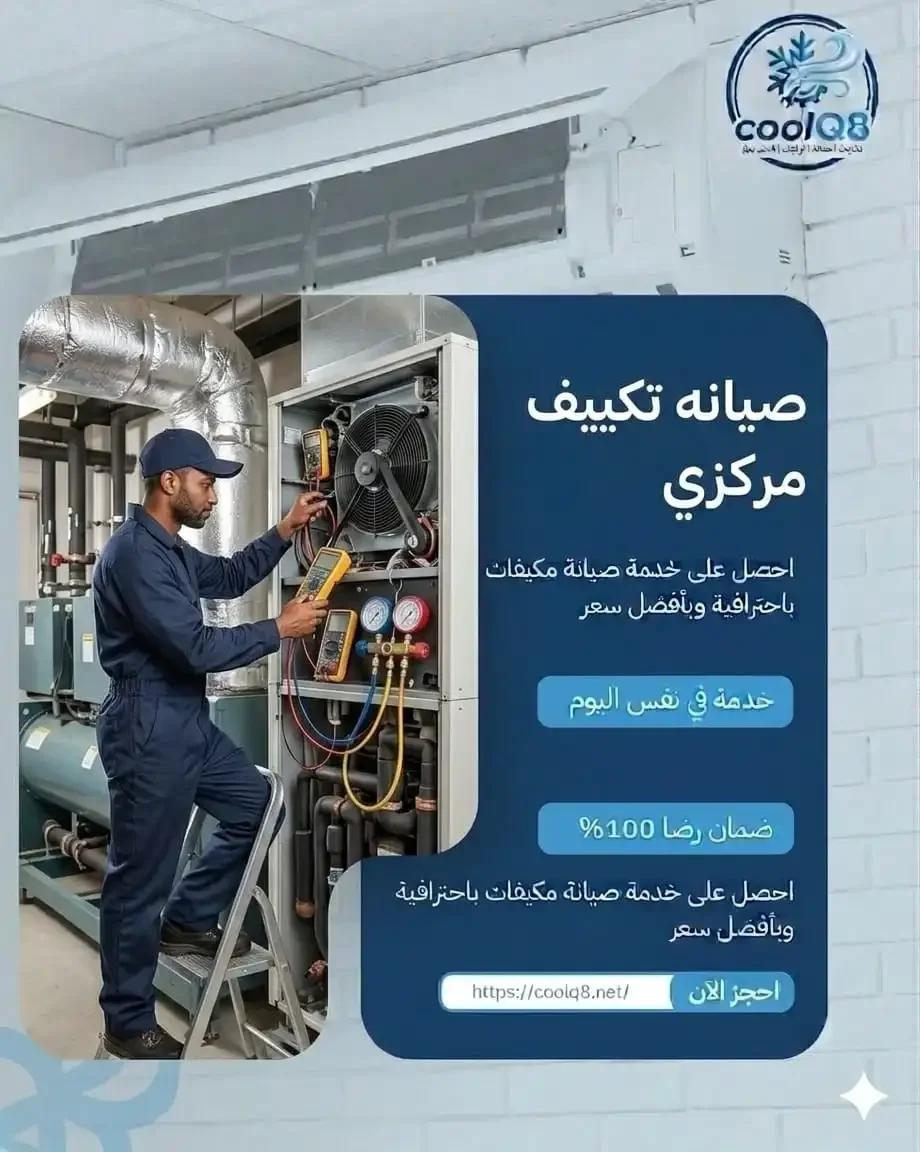
What Does Central AC Maintenance Include for Homes and Villas
When you book central air conditioning maintenance for your home or villa, it is important to know what will be inspected and what work the air conditioning units, air ducts, and control system actually need. Maintenance is not simply cleaning the air vents or switching on the equipment to confirm that cold air is coming out. It also does not mean dismantling every component or replacing working parts during every visit. The scope of work varies according to the type of system, the size of the home, the condition of the equipment, and any issues noticed during use. This article explains what residential central AC maintenance includes, the difference between routine work and additional repairs, and how to make sure the service suits your system without paying for unnecessary procedures.
Central AC Maintenance

Central AC Maintenance includes a range of inspection, monitoring, cleaning, and testing procedures determined by the system's design and actual condition. Some homes have a central unit that serves several rooms through air ducts, while other villas use multiple units serving separate floors or areas. For this reason, the same maintenance checklist should not be applied to every home without understanding how cooling is distributed and which components are installed.
An appropriate visit begins by asking the homeowner about the air conditioner's performance during the previous period. Is there a room that does not reach the required temperature? Has the unit's sound changed? Has water appeared around the air outlets or in the equipment area? This information helps direct the inspection toward components associated with the problem instead of performing general cleaning that does not address the complaint.
The technician then reviews the condition of components that require routine attention according to the manufacturer's instructions. The work may include inspecting filters and accessible airflow paths, reviewing condensate drainage, checking the response of the control system, and evaluating the condition of the units and any operating observations. Electrical tests and work involving the refrigeration circuit must be performed by a qualified specialist using procedures appropriate for the system.
Routine maintenance does not automatically include refrigerant charging, compressor replacement, or internal air duct cleaning. These procedures have different requirements and reasons for being performed, and each should be supported by a clear need, an inspection finding, or instructions specific to the equipment model.
To understand what the maintenance visit includes, pay attention to the following:
- Identify the type of system and its components before work begins: The technician should establish which units serve the home, where they are located, and how air is distributed because inspecting a system that serves an entire villa differs from maintaining several independent units distributed across floors and rooms.
- Listen to the observations of the home's occupants: Identifying rooms with weak cooling, unusual sounds, or differences in how the controls respond helps direct the inspection toward the actual problem instead of performing general work without understanding why maintenance was requested.
- Review the routine work required by the equipment: The condition of filters, drainage paths, and accessible components should be assessed according to the manufacturer's recommendations and operating conditions, and every component should not automatically be considered in need of cleaning or replacement during every visit.
- Distinguish between maintenance and repair: If the technician discovers a defective component, the problem, required procedure, and cost should be explained before work begins if the repair is not included in the agreed service.
- Explain the outcome of the visit: The homeowner should know what was inspected, which procedures were completed, and which observations require later follow-up so that maintenance does not become merely a visit whose benefit is difficult to evaluate.
Central AC Maintenance for Villas
Central AC Maintenance for Villas requires consideration of the building's size, multiple floors, and how cooling zones are divided. A single unit may serve a large area, or there may be independent units for different floors and annexes. The system may also use control components that allow cooling to be adjusted in separate areas. This design affects the inspection sequence and determines which components must be accessed during the visit.
In a multi-story villa, occupants may notice that the upper floor is warmer than the ground floor. This does not automatically mean that the central unit is defective because sun exposure, insulation, and how rooms are used may differ between floors. However, if cooling was previously balanced and then changed noticeably, it is appropriate to inspect air distribution and the control components associated with the affected area according to the system's design.
Access to the equipment is another important consideration. Units or sections of the air ducts may be located in elevated areas, service rooms, or above suspended ceilings. Inspection must be carried out using safe access methods, without opening ceiling sections or moving household fixtures before explaining the need for this to the villa owner.
The scope of maintenance should also be established before booking. If the villa has more than one unit, an offer may cover inspection of only one specified unit or all the units, and the cost of the work may vary according to the number of devices and the components that need to be accessed. Understanding this in advance prevents confusion between maintaining an entire system and servicing only one part of it.
Aspects that deserve attention in villas include the following:
- Identify the units serving each floor or area: Establishing which rooms are connected to each unit helps determine whether a cooling problem is confined to one part of the villa or affects the entire system, and it also clarifies the number of units included in the maintenance offer.
- Review cooling differences between floors: Room conditions, air distribution, and control response should be evaluated before assuming that temperature differences result from a fault in a major component or that every unit needs comprehensive cleaning.
- Organize access to the equipment: If some components are located above a suspended ceiling or in places that are difficult to reach, the appropriate inspection method should be agreed upon, including whether access panels or additional arrangements are needed to protect the property.
- Consider how annexes and rooms that are not continuously occupied are used: Maintenance needs may differ between a unit that operates every day and another used only occasionally, so each unit's condition should be reviewed according to its actual use and the instructions for its model.
- Define the scope of the offer clearly: It is better to establish whether maintenance includes the units serving different floors and annexes, their control components, and the associated air outlets so that the villa owner does not assume every part of the system is covered when the work is limited to one unit.
Central AC Maintenance for Homes
Central AC Maintenance for Homes focuses on maintaining cooling performance in the spaces used by family members every day while considering ease of access to the equipment and protecting furniture, ceilings, and floors during the work. The air conditioning unit may be located in a confined service area, or parts of it may be installed above a suspended ceiling near bedrooms and living spaces. This makes organizing the maintenance process just as important as the technical inspection itself.
Before the visit begins, it is useful for the homeowner to explain whether the problem is widespread or associated with a particular room. If airflow is weak only in the bedroom while the remaining rooms operate normally, the assessment should begin with the part associated with that room according to the system's design instead of assuming that the main unit requires a major repair.
It is also important to know which procedures can be performed without altering the home's finishes. Existing service openings may allow access to the components that need inspection, while certain situations require additional arrangements if the equipment cannot be reached appropriately. Ceiling panels should not be removed or wall sections opened simply to perform a general inspection without explaining the reason and obtaining the homeowner's approval.
An appropriate residential service includes reviewing factors that affect everyday use, such as control response, air distribution, water drainage, and the condition of components that the manufacturer recommends monitoring. Specialist procedures are determined by inspection findings and should not be treated as a fixed part of every visit.
The following details help make maintenance more suitable for the home:
- Identify the rooms where the complaint appears: It should be made clear whether the problem affects one room or every area because this information helps determine the appropriate inspection approach and avoids treating the entire system as defective.
- Protect the property while accessing equipment: If the work requires opening a service cover or handling a component above the ceiling, suitable precautions should be taken to protect furniture and floors, and the work area should be returned to an appropriate condition after completion.
- Review the response of residential control devices: The technician should confirm that settings reach the component they are intended to control according to the system's design, particularly when occupants notice a difference between the requested temperature and the response of the associated area.
- Check condensate drainage: Reviewing the condition of the drainage system helps identify existing problems that may cause water to collect in unsuitable locations, while recognizing that not every sign of moisture inside a home originates from the air conditioning system.
- Explain any work that requires access to particular rooms: If inspection includes air outlets or control components inside bedrooms or private spaces, it is appropriate to establish this in advance so the visit can be organized without unnecessarily disrupting the use of the home.
Central AC Maintenance Services
Central AC Maintenance Services vary according to the system's needs, so it is better to treat maintenance as a collection of specific procedures rather than a general description covering every possible service. One home may need routine inspection and a review of filters and drainage, while another requires specialist examination because of weak cooling or temperature differences between rooms.
When comparing service offers, the work included in each offer should be examined carefully. The expression comprehensive maintenance does not, by itself, explain whether the visit includes inspecting every unit, cleaning particular components, testing control devices, or providing a report on the system's condition. Repairs and replacement parts may also fall outside the basic price.
The value of the service becomes clear when the work performed is connected to the air conditioner's condition and the home's needs, not when the number of procedures increases without technical justification.
- Routine inspection service: This includes assessing the system's general condition and reviewing the components specified in the maintenance instructions appropriate for its model, while explaining whether any observations require additional work.
- Service addressing a specific complaint: This focuses on identifying the cause of a problem such as weak cooling, water leakage, or a particular area's failure to respond to the controls, and it may result in cleaning, adjustment, or a repair recommendation depending on the inspection findings.
- Specialist cleaning service: This is requested when deposits or another condition make it necessary to clean components not covered by ordinary care, and the location and method of the work should be identified before it is performed.
- Component repair service: This requires confirming that the component concerned is defective and explaining whether it can be repaired or needs replacement, with the cost stated before work begins.
- Follow-up service for a previous problem: This aims to verify the result of an earlier procedure or review a specific observation and does not mean automatically repeating every task performed during the previous visit.
Central AC Inspection

Central AC Inspection determines what work the home actually needs instead of relying on a fixed list of procedures. An appropriate inspection begins by reviewing the type of system and the history of reported observations, then checking its functions according to the manufacturer's instructions and operating conditions.
If the homeowner complains of weak cooling in every room, the technician may need to review shared components and the unit's operating conditions. However, if the problem is confined to one area, the components associated with that area should be inspected according to the design of the air distribution and control system. A single measurement or the observation that cold air is coming out is not enough to establish that every part of the system is functioning correctly.
A distinction must also be made between what users can safely observe and tests that require a specialist. Homeowners should not open electrical panels, handle moving parts, or work on the refrigeration circuit in an attempt to verify the quality of maintenance.
- Review the operating history and previous observations: Describing earlier faults and completed work helps guide the inspection without assuming that every new symptom has the same underlying cause.
- Check the system's response to the controls: The technician should evaluate whether operating commands and requested temperatures produce the appropriate response in the associated areas according to the equipment's design.
- Assess the condition of components available for inspection: This includes the parts that the manufacturer specifies should be monitored, while recognizing that certain components require special access methods or technical procedures.
- Perform specialist tests when necessary: Electrical checks and refrigeration circuit tests must be carried out by a qualified specialist using a method suitable for the model instead of being performed automatically without a technical reason.
- Record the findings before recommending repairs: It is better for the technician to explain the observation that has been confirmed, the component associated with it, and the proposed procedure so the homeowner can distinguish between necessary work and optional work.
Central AC Cleaning
Central AC Cleaning is part of maintenance when certain components need dust or deposits removed according to the equipment's instructions, but it does not necessarily mean cleaning every part of the system during every visit. Cleaning filters differs from cleaning heat transfer components, and both differ from cleaning the inside of air distribution ducts.
Dirt accumulation in certain locations may affect airflow or the performance of a component, but the appearance of an external air vent alone cannot establish whether the system needs specialist cleaning. The location and nature of the dirt and the appropriate method for addressing it must be identified.
It is also important to recognize that using water or cleaning products incorrectly may affect electrical components or sensitive surfaces. Cleaning must therefore be performed according to the manufacturer's instructions while protecting components that must not be exposed to water.
- Clean filters according to their type: Washable filters differ from types that require replacement, so the model's instructions must be followed instead of washing every filter or reinstalling it before it is ready for use.
- Assess the cleanliness of heat transfer components: If inspection reveals accumulation that affects the performance of a particular component, the appropriate cleaning method can be determined without assuming that every visit requires comprehensive washing of the units.
- Review areas where condensate collects: Certain components may require appropriate cleaning if deposits or obstructions are found to affect drainage, while any other fault confirmed as contributing to the problem must also be addressed.
- Protect components during the work: Water and cleaning products must not be directed toward electrical connections or components that are not designed for such exposure, and specialist procedures should be performed by a technician familiar with the equipment's requirements.
- Do not confuse unit cleaning with air duct cleaning: The unit may need cleaning while the ducts remain in suitable condition, or a problem inside a particular duct may require an independent assessment instead of automatically selling both services as one procedure.
Central AC Unit Maintenance
Central AC Unit Maintenance includes monitoring the components inside the unit or units serving the home according to the system's design. Equipment locations may differ from one home to another, so the units included in the visit and how they will be accessed should be established before work begins.
Inspection should not be limited to confirming that a unit switches on. The system may be able to start while an observation remains concerning airflow, drainage, or the response of a control component. Conversely, a problem in one room does not mean that every unit needs to be dismantled or have components replaced.
Electrical and mechanical components require appropriate inspection procedures performed by a qualified specialist, with the equipment's power isolation instructions and safety requirements followed.
- Identify the unit responsible for the affected area: If the home contains more than one unit, the technician should establish which unit serves the room where the problem appears before recommending work on other equipment.
- Review the condition of components associated with airflow: Inspection helps determine whether a component is performing incorrectly or an obstruction requires attention instead of interpreting every reduction in airflow as a fault affecting the entire unit.
- Check components associated with condensate drainage: The actual condition of the water path and related components should be inspected when accumulation or leakage appears, rather than simply cleaning a visible location that may not be the cause of the problem.
- Assess observations involving noise and vibration: Any noticeable change requires its source to be identified before deciding whether adjustment, repair, or monitoring is needed, and a component should not be replaced based on the loudness of a sound alone.
- Explain the condition of each unit separately: In homes containing multiple units, stating what was inspected and what work is needed for each unit helps prevent findings from different devices from becoming mixed together in one unclear report.
AC Duct Maintenance
AC Duct Maintenance focuses on the air ducts that carry conditioned air to the rooms of the home, and it differs from maintaining the unit responsible for producing cooling. A duct inspection may be needed when airflow becomes unusually weak in a particular area, visible damage appears in an accessible section, or an observation suggests a problem with air distribution.
Dust on an air vent does not mean that every internal air duct needs comprehensive cleaning. Cleaning the ducts also does not automatically correct a problem with the main unit or the control components. The reason for requesting the service and the scope of work should therefore be established before approval is given.
If the ducts are located above suspended ceilings, inspection may require access through designated service openings. Ceiling sections should not be opened without a clear justification and prior agreement on how the work will be carried out.
- Inspect accessible sections of the air ducts: Locations that allow inspection can be reviewed to identify visible damage or a problem requiring further examination instead of assuming that every duct is in the same condition.
- Assess air distribution between outlets: If airflow is weak at a particular outlet, the associated path and the control components appropriate for the system's design should be reviewed before recommending that every duct be cleaned.
- Determine whether internal cleaning is actually necessary: This procedure requires an assessment of the ducts' condition, the extent of dirt accumulation, and how the work area can be accessed, and it should not automatically be included in every routine maintenance visit.
- Review the condition of insulation when an associated observation appears: If visible damage or unusual condensation is found around a duct section, the cause and appropriate corrective action must be identified instead of covering the external mark without inspection.
- Explain the limits of the work inside the home: The ducts and outlets included in the inspection or cleaning should be specified, together with whether access openings or arrangements to protect ceilings and interior finishes will be required.
Central Air Conditioning System Maintenance

Central Air Conditioning System Maintenance means examining how the components work together rather than inspecting each part in isolation from the rest of the system. A unit may operate normally while the required airflow fails to reach a particular area, or the air ducts may be in suitable condition while a control component does not respond as intended.
Maintenance should therefore consider the relationship between cooling production, air distribution, zone control, and water drainage. The system's design determines which components are shared between rooms and which serve a particular space, helping avoid extensive repairs for a problem confined to one area.
Changes in how the home is used may also affect cooling requirements. If a room that was rarely used becomes occupied for long periods or the layout of an area changes, it may be necessary to assess the new usage conditions before assuming that the system has developed a fault.
- Review the relationship between units and cooling zones: Understanding which components serve each space helps determine the extent of a problem and select the appropriate inspection without treating every part of the system in the same way.
- Check that control operation matches air distribution: The response of each area to the requested settings should be evaluated according to the system's design, particularly if the user reports a noticeable difference between rooms.
- Consider building conditions when assessing performance: Sun exposure, insulation, and changes in room usage may affect cooling requirements, so these factors must be distinguished from faults that have been confirmed in the equipment.
- Identify shared work and work specific to individual areas: One part of the system may require a general inspection while a particular area needs separate corrective work, and it is better to explain this distinction before determining the service cost.
- Provide recommendations linked to the system's actual condition: Any recommendation for cleaning, adjustment, or repair should be based on a specific observation or a requirement stated in the manufacturer's instructions rather than an assumption that a central system needs every possible procedure during every visit.
Residential Central AC Maintenance
When requesting Residential Central AC Maintenance, the most important question is what your particular equipment needs, not how many procedures are included in the offer. An appropriate routine visit may be sufficient for an air conditioner that operates consistently, while another system may require specialist inspection because of a problem in a particular room, water leakage, or a noticeable change in performance.
Costs vary according to the number of units, the type of system, the scope of inspection, the required work, and access to the equipment. The price may cover inspection and specific procedures only, while replacement parts, repairs, and specialist cleaning are charged separately. It is therefore not possible to provide one accurate price for every home or villa without knowing the details of the system.
The most suitable service is one that explains to the homeowner what will be performed and why the equipment needs it, while separating routine work from additional procedures that should only be determined after inspection.
- Request an offer that identifies the units included: If the home contains more than one central unit, make sure you know which devices will be inspected so the price for maintaining one unit is not misunderstood as covering the entire system.
- Understand the limits of the price before giving approval: Ask whether the visit includes inspection and ordinary cleaning only or covers other procedures, and how repairs discovered during the inspection will be priced.
- Do not approve refrigerant charging as a routine procedure: Work involving the refrigerant charge requires a confirmed technical reason and procedures appropriate for the system, and adding refrigerant is not an automatic part of every residential maintenance visit.
- Review proposed work if the equipment is operating normally: Booking routine maintenance does not mean the air conditioner needs component replacement or comprehensive internal cleaning, and every procedure should have a clear justification.
- Keep the visit report for follow-up: Recording the equipment's condition, completed work, and remaining observations helps make clearer decisions during future visits without repeating procedures that the system has not been shown to need.
How Can You Confirm That Central AC Maintenance Is Complete Before the Technician Leaves?
The completion of maintenance is not measured by the number of covers opened or the amount of dust removed. It is measured by whether the agreed work has been performed and whether the relevant system functions have been checked. If the visit was routine, the components reviewed according to the equipment's requirements should be explained. If there was a specific symptom, such as weak cooling in a particular room, it should be made clear whether the cause was identified and what procedure was performed to address it.
It is important that the homeowner does not rely on the feeling of cool air alone to judge the outcome of the service. Certain observations may require appropriate testing or later follow-up, and inspection may reveal additional work that was not included in the original agreement. In that situation, what has and has not been completed should be explained instead of treating the visit as a complete solution to every problem in the system.
- Review the agreed list of work: Ask what was inspected, cleaned, or tested, and make sure any component that could not be accessed or required additional arrangements is identified instead of assuming that every part was included in the visit.
- Ask about the outcome of the original complaint: If you requested service because of weak airflow or water leakage, it is appropriate to find out what cause the technician identified and how the result of the corrective work was verified, or why additional work is still required.
- Check that opened components have been returned to an appropriate condition: Service covers should be closed, and any fixtures or areas affected by the work should be returned to a suitable condition before the technician leaves.
- Request clarification of work that was not included: If the inspection reveals a repair or specialist cleaning procedure that was not performed, obtain a clear description of why it is needed and its proposed cost instead of confusing it with the maintenance that has already been completed.
- Keep observations that require follow-up: A report explaining the condition of the units, completed procedures, and any observations requiring later review helps organize home maintenance without repeating unnecessary visits or unjustified work.
Conclusion
Central AC maintenance for homes and villas includes inspecting the system's condition, reviewing components that require routine attention, and checking air distribution, control response, and condensate drainage, with cleaning or repairs performed when a need for them has been confirmed. The scope of work varies according to the system's design, the number of units, the size of the home, and the condition of the equipment. There is therefore no single maintenance checklist that is suitable for every home and villa.
Routine maintenance should not be confused with comprehensive air duct cleaning, refrigerant charging, or replacement of components. These procedures are not automatically performed during every visit. Instead, they are determined according to inspection findings and the manufacturer's instructions.
Before booking service for your home in Kuwait, explain the type of system and any problems you have noticed, and ask which units and procedures are included in the price. After the visit, request a description of what was completed and what requires follow-up so that maintenance is connected to your air conditioner's actual needs rather than simply the advertised name of the service.
Frequently Asked Questions
What does central AC maintenance for a home include?
Appropriate work includes inspecting the system's condition, reviewing the components specified in the maintenance instructions, and checking air distribution, control operation, and water drainage, with cleaning or repairs performed according to the equipment's condition and inspection findings.
Is central AC maintenance for villas different from maintenance for smaller homes?
It may differ because of the building's size, the number of units, multiple floors, control zones, and how the equipment can be accessed. The scope of service should therefore be determined according to the design of the system installed in each home.
Is air duct cleaning an essential part of every maintenance visit?
No. Internal duct cleaning requires an assessment to establish whether there is an actual need for it and to determine the appropriate scope of work. It is not an automatic procedure during every routine maintenance visit.
Does routine maintenance include refrigerant charging?
Refrigerant charging is not an automatic routine procedure. Any work involving the refrigerant charge must be based on an appropriate diagnosis and a confirmed technical reason according to the system's specifications.
Should every central AC unit in a villa be inspected?
This depends on the agreed scope of service, the condition of the units, and their maintenance needs. If the villa contains several units, it is important to identify which ones are included in the offer before work begins.
Is cleaning the air vents enough to maintain central AC?
No. Cleaning visible components does not replace monitoring the parts specified by the manufacturer, and it does not necessarily correct problems involving controls, drainage, or unit performance. The required work must therefore be determined according to the system's condition.
Does maintenance include repairing any fault discovered by the technician?
Not necessarily. Repairs and replacement parts may fall outside the routine maintenance price. The problem, required work, and cost should be explained before the repair is performed.
How can I tell whether central AC maintenance has been completed?
Review the agreed work and ask what was performed, what the inspection found, and whether the original complaint was resolved. You should also receive clarification of any additional work or observations requiring follow-up.
What determines the cost of central AC maintenance for a home or villa?
The cost is affected by the type of system, the number of units, the scope of inspection, the required work, and access to the equipment. Repairs, specialist cleaning, and replacement parts may be charged separately.
Does central AC need maintenance if it is operating normally?
It may need routine attention according to the manufacturer's instructions and operating conditions. However, normal operation does not automatically justify replacing working components or performing specialist cleaning without a clear need.